

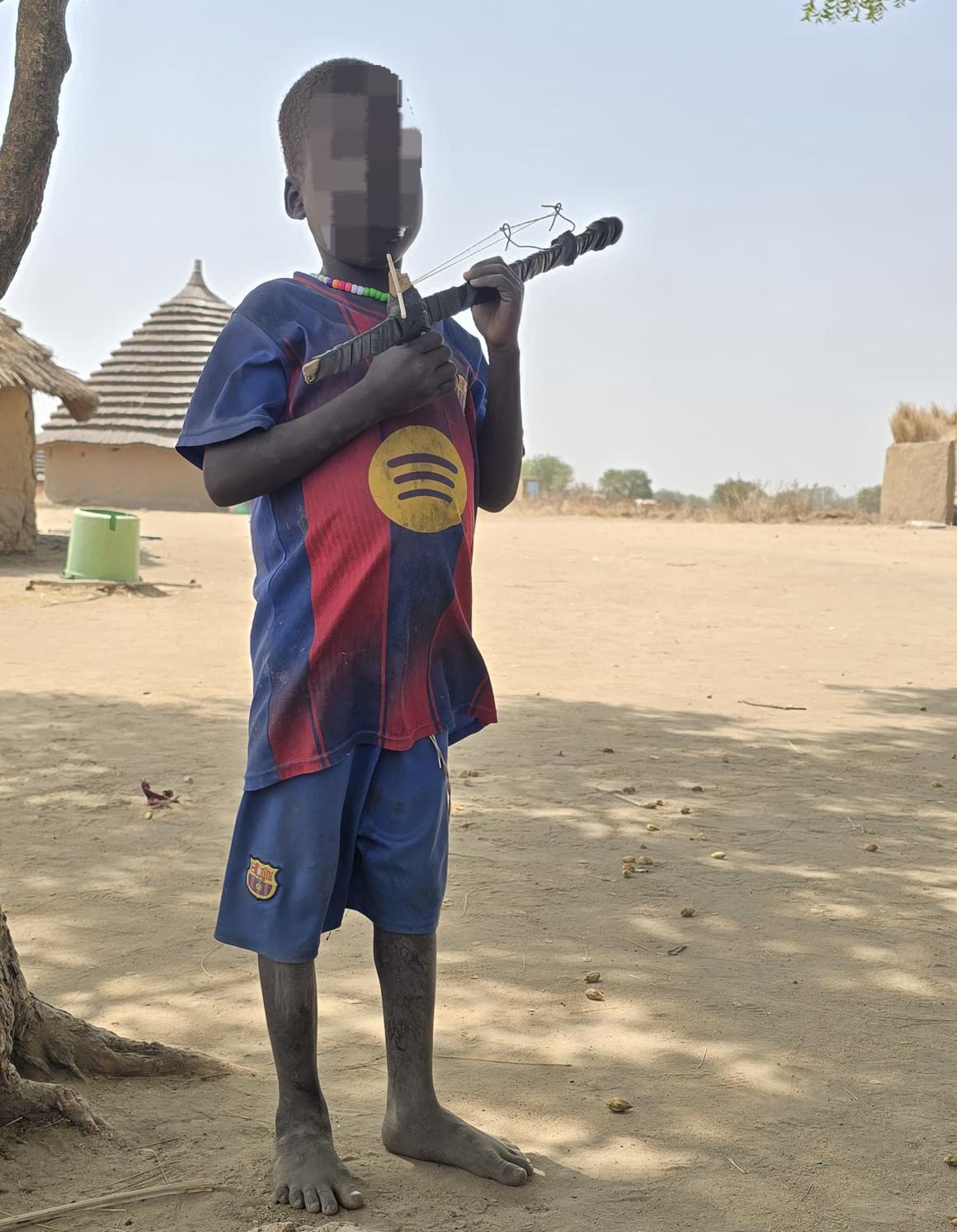
As a UN Peacekeeper responsible for carrying out engagements on behalf of my unit, I encounter countless sights each day. Some restore faith, some test it and some quietly linger long after the moment has passed. One day, it was not gunfire or confrontation that unsettled me. It was a child. He stood barefoot on dry, cracked earth, no older than five years. At that age, children are meant to be curious, discovering the world through questions, but this child’s world was shaped by something different. He was holding a gun. Not a real one, but one he had made himself from sticks and wire. He held it close, not like a toy, but like something familiar, something necessary.
That simple sight made me pause. It forced me to ask a question that still lingers: what kind of world are we living in where a child learns this before learning how to dream?
He had not been recruited, at least not yet. But conflict had already claimed his imagination. Surrounded by weapons, crime and constant instability, the instinct to defend himself and his family has become ingrained. No one taught him this in words; it was the environment itself. In places shaped by prolonged conflict, children absorb fear long before they understand what safety is.
According to UNICEF, between 2005 and 2022 more than 105,000 children were verified as recruited and used by armed forces and armed groups worldwide, though the real number is likely higher. In South Sudan alone, an estimated 19,000 children remain associated with armed actors. The situation is equally concerning across the border in Sudan. Following the 2023 conflict, risks have further increased, with grave violations and displacement placing thousands of children in danger of recruitment. These children serve not only as fighters but also as scouts, porters, messengers, cooks and guards. Many, particularly girls, face gender-based violence, and all are deprived of safety education, and dignity.
UNICEF reporting and media coverage on the release of children formerly associated with armed groups in South Sudan highlight both progress and persistent challenges. Reintegration programs provide essential psychosocial support, access to education and vocational training to help children recover from the effects of conflict. However, reintegration remains complex. Children often return to communities affected by trauma, fear and mistrust. While some are welcomed home, others face stigma or social exclusion, complicating their recovery and long-term well-being.
This reality is particularly evident in my region of deployment, the Abyei Administrative Area, an area with contested ownership between Sudan and South Sudan, where unresolved political status, recurring intercommunal tensions and repeated displacement continue to place civilians at constant risk. In his December 2025, interview “We Can’t Afford Not to Be in Abyei,” released in Feb 2026 , the Former Force Commander of the United Nations Interim Security Force for Abyei (UNISFA), Major General Robert Affram, underscores that the Mission’s presence is essential to preventing a security vacuum that would rapidly expose communities particularly women and children to violence and forced displacement. His words reinforce a stark truth I witness daily: peacekeeping in Abyei is not optional, it is a lifeline.
Standing there, looking at that five-year-old, I realized how early this path begins. Long before recruitment or coercion, violence becomes routine, and survival becomes personal. What troubled me most was not what the child was holding, but what he was missing: no ball, no toy, no visible space for conventional childhood to exist. What struck me even more was that he was wearing an FC Barcelona jersey, a symbol of sport in much of the world, yet he did not understand what it represented, nor did he have access to something as basic as a football. Even the language of play had been taken away from him.
No one knows what that boy will become tomorrow. With peace and opportunity, his future could be very different. Without them, he risks becoming one among the thousands of children drawn into armed conflict.
Peacekeeping is often measured in patrols, ceasefires and mandates. But moments like this remind us that peace is also about protecting childhood itself, ensuring that a child’s first instinct is curiosity, not defense. They deserve to be carefree just to exist, to play and to simply be children.
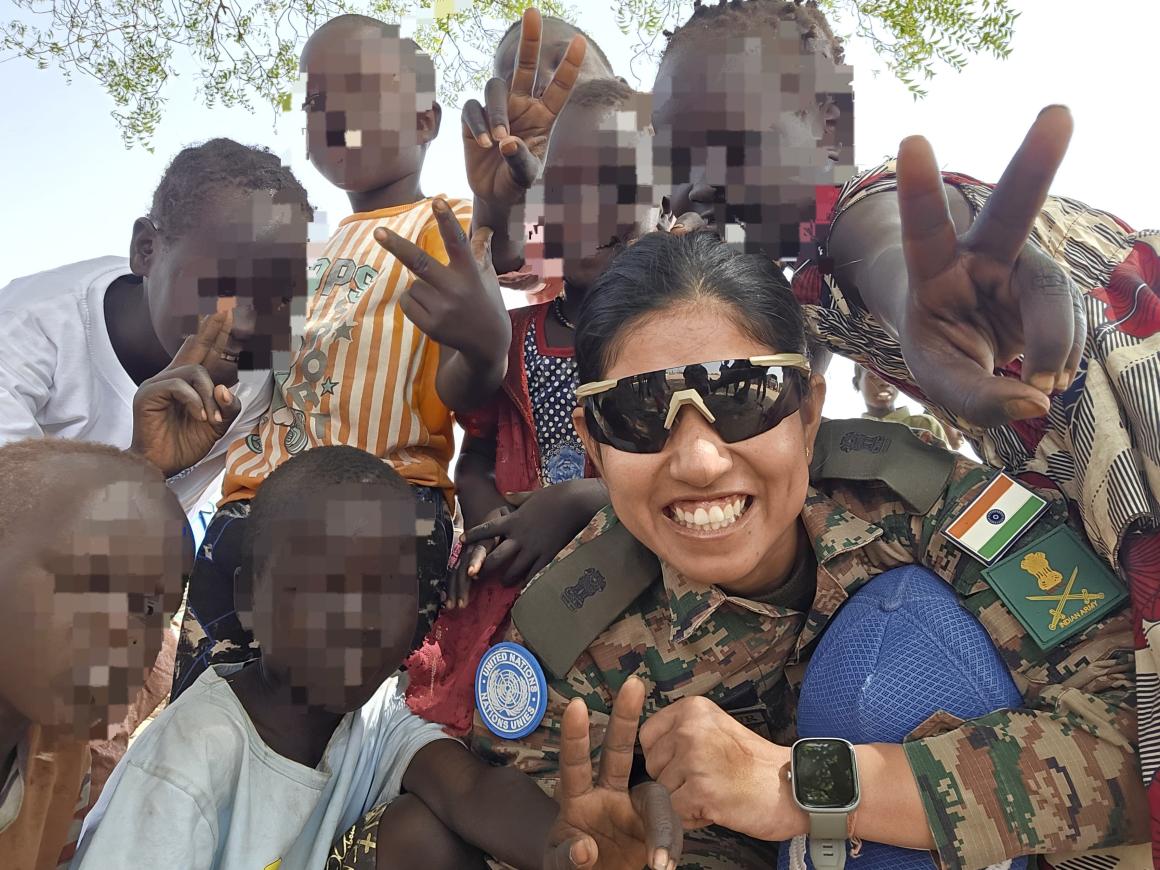
When a child learns to make a gun before learning how to dream, childhood is truly lost in chaos.
Written By: Maj Aakrati Sirur
Engagement Platoon Commander, INDBATT- III, UNISFA


